
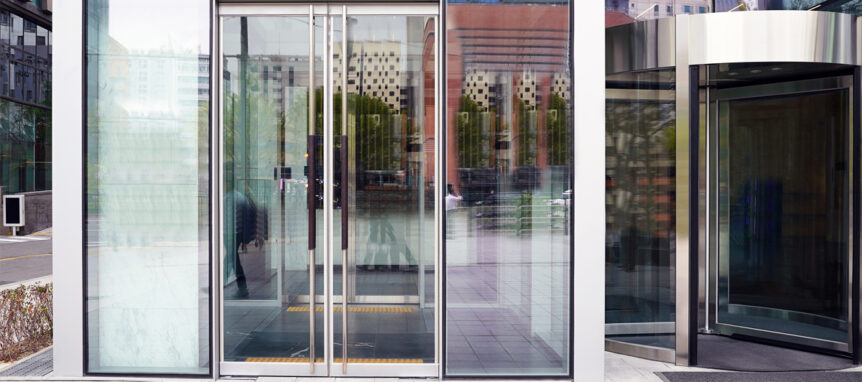
Commercial doors in busy buildings can open and close countless times throughout a typical workday. Retail stores, healthcare facilities, office buildings, restaurants, and other high-traffic commercial properties depend on their entry systems to operate reliably from opening until closing. Although commercial doors are designed for frequent use, repeated operation eventually takes a toll on hardware, alignment, automatic components, and other parts of the system.
Understanding how high foot traffic affects commercial doors can help business owners recognize early signs of wear, plan preventative maintenance, and avoid unexpected problems that disrupt daily operations.
Repeated Use Creates Gradual Wear
Every time a commercial door opens or closes, several components are put to work. Hinges or pivots support the door’s weight, closers control its movement, locks and latches engage, and automatic systems activate sensors and operators. A single cycle places very little stress on these components, but thousands of cycles over time can gradually cause wear.
High-traffic entrances experience this process much faster than doors that are only used occasionally. Regular inspection is important because many signs of wear develop slowly and may not be obvious until they begin affecting door performance.
Hinges and Pivots Can Wear Over Time
Hinges and pivots are responsible for supporting commercial doors while allowing them to move smoothly. Constant use can eventually loosen or wear these components, potentially causing the door to shift within its frame.
As alignment changes, the door may begin rubbing against the frame, dragging along the floor, or requiring additional effort to open. Continued operation in this condition can place additional strain on other hardware. Correcting worn hinges or pivots early can help prevent more extensive damage.
Door Closers Handle Constant Movement
Commercial door closers are another component directly affected by heavy use. Each time someone passes through a manual commercial door, the closer controls the door as it returns to its closed position.
Over time, a closer may begin operating too quickly, too slowly, or inconsistently. A door might start slamming or fail to close and latch completely. These problems can affect safety and security while also placing unnecessary stress on the door and frame. Professional adjustment or repair can restore controlled operation.
Automatic Door Components Face Additional Demands
Automatic doors are particularly useful in high-traffic environments because they provide convenient, hands-free access and help maintain steady traffic flow. However, frequent use means sensors, operators, and mechanical components are continuously working throughout the day.
Sensors must repeatedly detect approaching visitors, while operators control every opening and closing cycle. Regular maintenance and calibration help ensure these systems continue responding correctly and safely, particularly at busy commercial entrances.
Heavy Traffic Can Affect Door Alignment
Repeated use can gradually contribute to door alignment problems, particularly when hardware begins to wear. Commercial doors may also be struck by carts, deliveries, equipment, or other objects during busy periods, increasing the likelihood of alignment issues.
Even slight misalignment can affect how a door closes and latches. If the problem continues, additional components may begin wearing prematurely. Maintaining proper alignment helps protect the entire system while keeping entrances easier to use.
Security Can Be Affected by Worn Components
High foot traffic can also affect the security of a commercial entrance. Worn locks, latches, closers, and alignment components may prevent doors from closing securely after each use.
A door that remains partially open or does not latch consistently can create an unnecessary vulnerability. Routine maintenance helps ensure doors return to the correct position and security hardware continues functioning properly throughout the day.
Accessibility Depends on Consistent Performance
A heavily used commercial door must remain accessible regardless of how many people pass through it each day. Wear that causes a door to become difficult to open, close too quickly, or operate inconsistently can create barriers for individuals with mobility limitations.
Automatic doors also need reliable sensors and properly calibrated opening and closing cycles. Keeping these components in good condition supports a safer and more accessible entrance for customers, employees, and visitors.
Preventative Maintenance Becomes Even More Important
The more frequently a commercial door is used, the more important routine maintenance becomes. Preventative inspections give technicians an opportunity to identify loose hardware, developing alignment problems, closer issues, and automatic system concerns before they result in a breakdown.
Maintenance schedules can also be tailored to the amount of traffic an entrance receives. A heavily used main entrance may need more frequent attention than doors in lower-traffic areas of the same building.
Keeping High-Traffic Commercial Doors Reliable
High foot traffic is a normal part of operating many commercial properties, but it places additional demands on door systems. Routine inspections, timely repairs, and preventative maintenance can help reduce premature wear while supporting security, accessibility, and reliable everyday operation.
For more information about maintaining or repairing high-traffic commercial door systems, contact Apex Door Solutions. Apex Door Solutions helps businesses keep their commercial doors safe, dependable, and ready to handle the demands of daily use.