
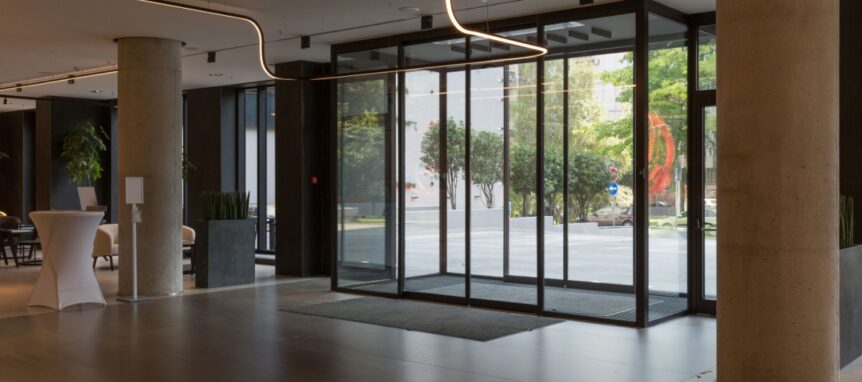
Automatic doors have become a standard feature in many commercial buildings throughout Orlando, especially in retail spaces, medical facilities, offices, and other high-traffic environments. While these doors appear simple to the average visitor, they rely on sophisticated sensor systems to operate safely and efficiently. When sensors are properly installed and calibrated, automatic doors provide smooth access and reliable performance. When they are not, they can create safety risks, accessibility issues, and costly disruptions for businesses.
The Purpose of Automatic Door Sensors
Automatic door sensors are designed to detect motion or presence and signal the door to open or remain open when someone is approaching or passing through. Their primary purpose is safety. Sensors help prevent doors from opening too late, closing too quickly, or striking a person as they enter or exit a building.
In commercial settings, sensors also support accessibility by reducing the physical effort required to use an entrance. For individuals using mobility devices or those with limited strength, properly functioning sensors are essential to safe and independent access.
How Automatic Door Sensors Work
Most automatic commercial doors use motion sensors, presence sensors, or a combination of both. Motion sensors detect movement toward the doorway, triggering the door to open as someone approaches. Presence sensors monitor the threshold and surrounding area, ensuring the door remains open while someone is still within the safety zone.
These sensors use technologies such as infrared detection, microwave signals, or a combination of systems to accurately sense activity. When calibrated correctly, they work together to create a seamless entry experience, opening at the right time and closing only when it is safe to do so.
Why Proper Calibration Is Critical
Calibration determines how sensitive a sensor is, how wide its detection area reaches, and how it responds to movement. If a sensor is not properly calibrated, the door may open too late, close prematurely, or fail to respond altogether. These issues can be frustrating for customers and dangerous in busy commercial environments.
Poor calibration can also lead to doors opening unnecessarily, which affects energy efficiency and places added wear on mechanical components. Over time, this extra strain can shorten the lifespan of the door system and increase repair costs.
Common Problems Caused by Misaligned Sensors
When sensors are not functioning correctly, businesses may notice inconsistent door behavior. Doors may hesitate before opening, remain open too long, or close unexpectedly. In some cases, automatic doors may stop responding entirely, forcing staff to prop doors open or restrict access.
These problems often stem from environmental changes, accidental impact, or normal wear over time. Even minor shifts in sensor alignment can disrupt performance, especially in high-traffic Orlando commercial properties where doors are used constantly throughout the day.
Accessibility and Compliance Considerations
Automatic doors play a key role in meeting modern accessibility standards. Sensors must be calibrated to detect individuals of varying heights, speeds, and mobility levels. If sensors fail to recognize someone approaching slowly or using assistive equipment, the door may not open in time, creating a barrier to entry.
Proper calibration helps ensure doors comply with accessibility expectations while providing a safe and welcoming experience for all visitors. For businesses open to the public, maintaining compliant door systems is an essential part of responsible property management.
The Impact of High-Traffic Environments
Commercial buildings in Orlando often experience heavy daily foot traffic, especially in retail centers, healthcare facilities, and office complexes. High usage increases the likelihood of sensor wear, misalignment, or interference from environmental factors such as sunlight, reflections, or nearby movement.
Regular professional inspections help identify early signs of sensor issues before they lead to failures. Routine service ensures sensors remain accurately calibrated and responsive, even as conditions change over time.
Repairs, Adjustments, and Preventative Maintenance
In many cases, sensor-related issues can be resolved through professional recalibration, adjustment, or targeted repairs rather than full system replacement. Technicians can fine-tune detection zones, replace worn components, and test door operation to ensure reliable performance.
Preventative maintenance is one of the most effective ways to avoid unexpected breakdowns. Scheduled service helps extend the life of automatic door systems while reducing downtime and safety risks for businesses and their customers.
The Importance of Professional Service
Automatic door sensors require specialized knowledge and precise adjustments. Improper handling can worsen existing problems or create new safety concerns. Professional service ensures sensors are calibrated correctly, door systems operate smoothly, and all safety requirements are met.
For businesses looking to maintain reliable and accessible entrances, working with experienced commercial door specialists is essential. Expert evaluation and service protect both the door system and the people who rely on it every day.
Keeping Automatic Doors Safe and Reliable
Automatic door sensors are a small component with a significant impact. When they work as intended, they support safety, accessibility, and efficiency across commercial environments. When neglected, they can quickly become a source of frustration and liability. For businesses that rely on automatic doors, professional inspection and calibration are key to long-term performance. With their extensive experience servicing automatic door systems, Apex Door Solutions helps businesses maintain reliable, compliant, and efficient entrances. For more information or to schedule service, contact Apex Door Solutions for professional commercial door support.